[Column] Can Japanese Hydroelectric Technology Be Used Abroad – From "Building" Power Plants to "Using them for a Long Time"
✅ Roughly speaking
- 💧 The strengths of Japanese power companies are not limited to the equipment itself, such as water turbines Long experience in developing, renovating, operating and maintaining hydroelectric power plants It's also available there.
- 🌏 Philippines , Indonesia , Vietnam Japanese companies are participating in hydropower projects in different ways.
- 🔋 As sunlight and wind power increase, Pumped storage power generation's "transfer of electricity to the required time" function Attention is also being drawn to this. However, pumping water is not just a facility that generates electricity.
- ⚖️ The success or failure of overseas expansion will likely depend not only on technology, but also on how business rights, electricity sales revenue, equipment upgrades, and responses to local communities and the environment are designed.
Table of Contents
Introduction
This time, we will explain how the hydroelectric power generation technology and experience developed by Japanese power companies have led to various businesses overseas.
I think many of you have heard that "Japan's hydroelectric power technology is high."
However, we need to consider what that "technology" means separately.
The technology to manufacture water turbines and generators, and the technology to find suitable locations for power plants, build them, operate them while monitoring the condition of rivers and equipment, renovate them, and use them for a long time, are not the same for both the operators and the form of the business.
This paper will focus primarily on the latter, namely the knowledge that power companies have accumulated as operators.
The materials discussed in this paper do not allow us to rank the technological capabilities of Japanese companies globally.
But, New development overseas , Renovation of existing facilities , Participation in operation and maintenance You can see a specific example of this.
Thinking about the contents of "high technology" in separate terms
Manufacturing equipment and operating power plants are separate jobs
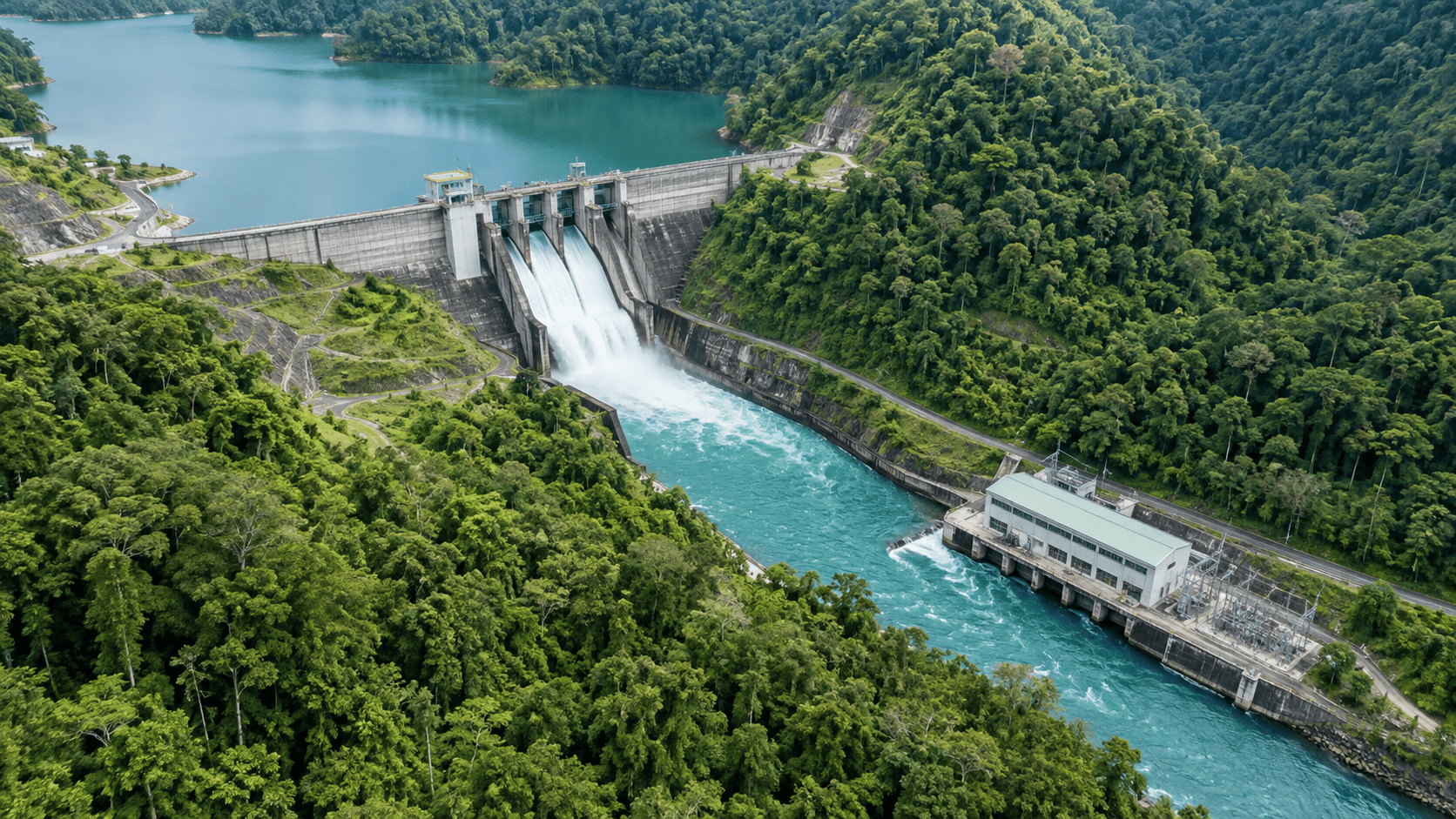
Hydroelectric power plants involve not only equipment such as water turbines and generators, but also water intake equipment, waterways, dams, and power transmission equipment depending on the method and location.
When considering the business strengths of a power company, I believe it's important to look not only at the performance of individual devices, but also at their ability to combine and operate them over long periods of time.
For example, there are issues such as how to assess the deterioration of equipment over time, when to carry out repairs and updates, how to operate in response to fluctuations in water volume, and how to pass on knowledge to local engineers.
This is different in nature from a job that ends with the delivery of equipment.
J-POWER's overseas consulting business Looking at it, the company handles research, business feasibility studies, design, construction supervision, and technology transfer.
This also shows that overseas expansion includes not only the stage of "building" a power plant, but also the stage of establishing the business and supporting its operation.
Pumped storage power generation is understood by separating "power generation" from "storage"
pumped-storage power generation This system uses electricity to pump water from the lower reservoir to the upper reservoir, and then drops the water when needed to generate electricity.
Therefore, it is not appropriate to understand the amount of electricity generated by pumping as the amount of new renewable energy generated.
Rather, A function that shifts the time when electricity is used and the time when electricity is taken out, helping to adjust supply and demand is important.
IEA's "Renewables 2025" The annual new introduction of pumped-storage hydroelectric power generation worldwide is It will double to 16.5 gigawatts by 2030 The outlook is as follows.
This is a prediction, not a confirmed achievement, but I think it will serve as evidence of interest in the equipment that supports the fluctuating renewable energy sources.
Japanese power companies are doing what they do overseas
Philippines ―― Renovating old equipment and continuing business
J-POWER is A joint venture between a local company and Sumitomo Corporation wins a bid to privatize the CBK power plant complex in the Philippines I did.
The new company established by the community is The power plant will be acquired and operations will begin on February 8, 2026 Yes, I am.
J-POWER and Sumitomo Shoji Participated in the management of the company that previously owned and operated the CBK power plant I was doing it.
Previous Following the expiration of the BROT contract (construction, renovation, operation, and transfer contract) and the transfer of the facility, the company moved to a new operating system through a privatization tender It's the shape.
What's interesting here isn't just that they built a new power plant.
The company I have been involved in building equipment maintenance systems and training local engineers He explains it as follows.
The ability to renovate and continue using old equipment, as well as the establishment of an operational system that includes human resources, are examples of things that can be valuable for overseas business.
However, this does not prove that "we were able to win the bid solely on Japanese technology."
Since it is not possible to confirm the breakdown of factors that led to the successful bid from the published documents, it is more prudent not to directly link technical ability with the successful bid results.
Indonesia – Building a business from finding suitable locations
On the other hand, Kansai Electric Power's Rajamandara Hydroelectric Project This is an example of new development.
According to the company's explanation, A flow-in power plant that utilizes discharged water from an upstream power plant And, Commercial operation began in May 2019 I did.
The Kansai Electric Power Co., Inc. The process involved excavating a project, acquiring development rights, establishing a business company with a local company, contracting for electricity sales, construction, and financing It has also been made public.
Build-Operate-Transfer (BOT) method in which the facility is relocated after construction and operation and at the end of the contract period It is also clearly stated that this is the case.
Even if the technical decision to find a suitable location for power generation is the starting point, in order to turn it into a business, it must be connected to development rights, electricity suppliers, funding, licenses, and exits.
I think this is a case where technology and contracts come together and it becomes clear that this will be the first time the company expands overseas.
Vietnam – Increasing the value of existing power plants
Furthermore, Tokyo Electric Power Company Renewable Power's overseas hydropower business The focus is on investing in existing power generation companies and improving operation and maintenance.
The company Investment in hydroelectric power companies in Vietnam Based on the O&M (Operation and Maintenance) technology developed in Japan, Aiming to improve the value of existing power plants and support new development That's what I'm saying.
The "value improvement" referred to here is not achieved automatically by purchasing equipment.
It is necessary to determine the actual amount of power generated, downtime, maintenance costs, and the need for additional investment, and to verify the results of the improvements.
Please note that the company is only presenting its business policy, and this article does not confirm the individual improvement results.
Where legal matters are involved in overseas hydropower projects
Read business rights and electricity sales revenue over time
Hydroelectric power plants are facilities that are used for a long period after construction.
Therefore, when considering a case, it is important not only to see "if we can invest now," but also to check how long the business rights and permits for river use will last, to whom the equipment will be handed over at the end of the contract, and how much renovation will be required by then.
In the CBK case in the Philippines, Following the expiration of the previous contract and the transfer of the facility, operations began under a new system through privatization bidding .
The Rajamandala case in Indonesia BOT method for planning facility relocation after the end of the electricity sales period Yes.
Although the terms of the contracts are not the same, both raise the question of how to connect "long-term operating facilities" with "time-limited business rights."
Even when it comes to electricity sales revenue, looking only at the amount of electricity generated is not enough.
For each case, it is necessary to check how the fees are determined, the creditworthiness of the paying entity, the burden if the amount of electricity generated falls below expectations, and whether there is any compensation for supply and demand adjustments.
Pumped storage, in particular, is valuable to the system, Without a system in place to generate revenue for businesses, investment decisions become difficult .
Invest in existing equipment to examine burdens that are difficult to see
When investing in existing power plants or operating companies, past operating performance is an important factor in making decisions.
On the other hand, future major repairs, safety measures for dams and waterways, renewal of permits and licenses, and past environmental and social challenges may surface after the investment.
In pre-acquisition investigations, or due diligence, it is desirable to look not only at data on power generation and income and expenditure, but also at the condition of the equipment, breakdown and accident history, permits and licenses, land and water use rights, and records of agreements with local residents and complaints.
Furthermore, it is necessary to translate the decision on who will make and bear the additional investment into an agreement with the co-investors.
This is a process that transforms engineers' "renovate and get better" approach into an investment plan and division of responsibilities that can be shared among businesses.
I believe it's crucial to link this technical perspective with contractual responsibilities.
Being low carbon and being ESG-appropriate are not the same thing
Hydroelectric power is expected to be a low-carbon power source, but this alone will not solve the environmental and social challenges of individual projects.
The World Bank Group has identified the following as issues to consider in hydropower projects: Resident relocation, biodiversity, working environment, community safety, dam safety He lists the following:
Climate risk assessment for drought and flooding, and ongoing dialogue with local communities It also mentions this.
This does not mean that there are problems with any of the cases handled by Japanese companies.
Rather, overseas expansion should not be reduced to simply "investing in green power plants," but rather require careful consideration of the specific impacts of the project and countermeasures.
The focus of verification will likely change for new projects and investments in existing equipment.
Summary
When asked whether the hydroelectric power generation technology of Japanese power companies is being utilized overseas, I think the answer to "it is being utilized" in light of actual cases is "it is being utilized."
However, it is not accurate to reduce those strengths solely to the performance and construction technology of water turbines.
Finding suitable locations, assembling businesses, renovating old equipment, developing talent, and operating stably for a long time are also insights that can be brought overseas.
On the other hand, high technology alone does not guarantee business success.
The project will cover the expiration date of business rights, electricity sales revenue, the burden of equipment renewal, and the impact on local communities and the environment over a long period of time.
I believe that Japan's overseas expansion of hydroelectric power is not only a matter of exporting technology, but also a matter of designing such a business.
Related Articles
-
 [Column] Can a corrupt country grow its economy – Quality of growth from the Philippines
 -
[Column Writing] 【ESG Strategies for Business 】35th Malaysian PDPA Revision and Practical Responses for Japanese Companies— Guidelines for DPO Appointment, Disclosure Notification, and Cross-Border Data Transfer
-
[Column] Will Vietnam change ASEAN's growth pecking order. Semiconductor and human resource development advance the industry
-
[Column] Why Malaysia's semiconductor industry is being reevaluated now. Current location as the center of ASEAN restructuring
-
【Announcement 】 First report published as JETRO Platform Coordinator
-
[Column] Commonalities among companies that fail in emerging markets. How to go beyond ordering products, entrusting agencies, and managing employees
-
[Column Writing] 【 ESG Strategies for Business 】34th National Carbon Market Policy and ETS Initiative— How to Move from Voluntary to Compliance Markets
-
[Column] A thorough comparison of EV policies, subsidies, and charging infrastructure in five major Southeast Asian countries — Where Japanese companies are likely to invest