[Column] Complete explanation of Malaysia's new solar system, Solar ATAP: A paradigm shift from 2026 and its legal and practical impact on Japanese companies
[Column] Complete explanation of Malaysia's new solar system, Solar ATAP: A paradigm shift from 2026 and its legal and practical impact on Japanese companies
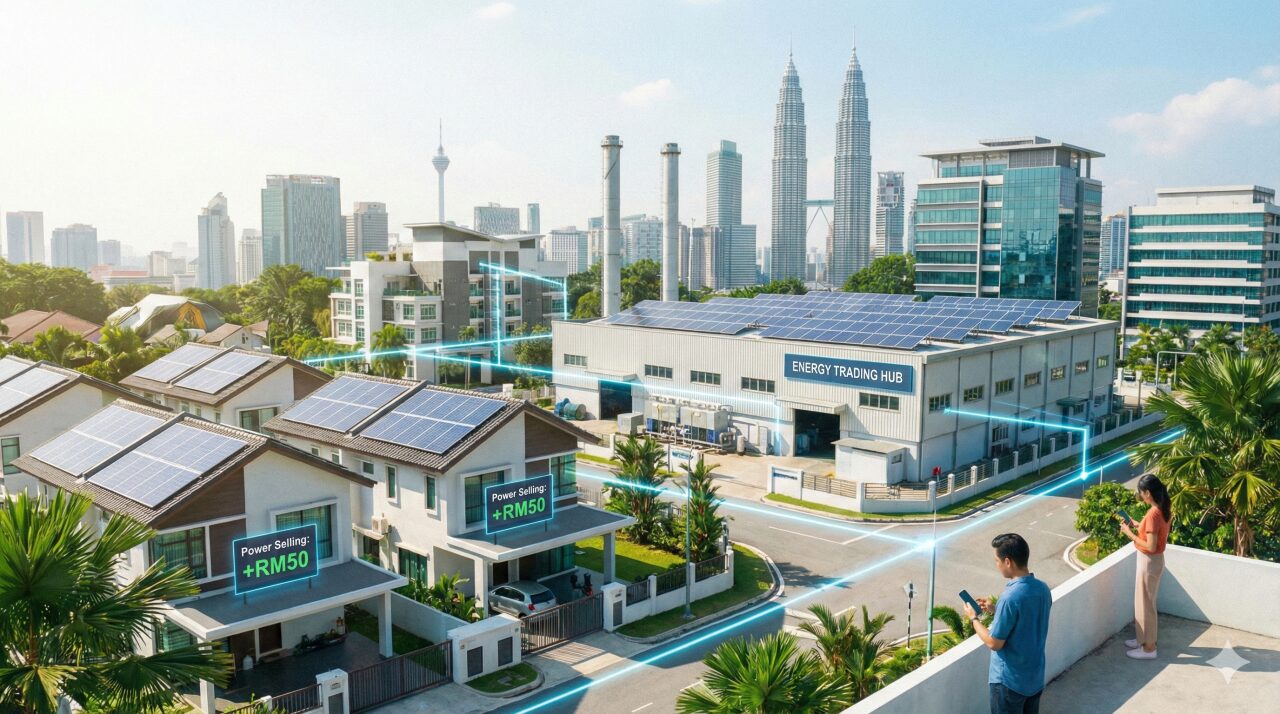
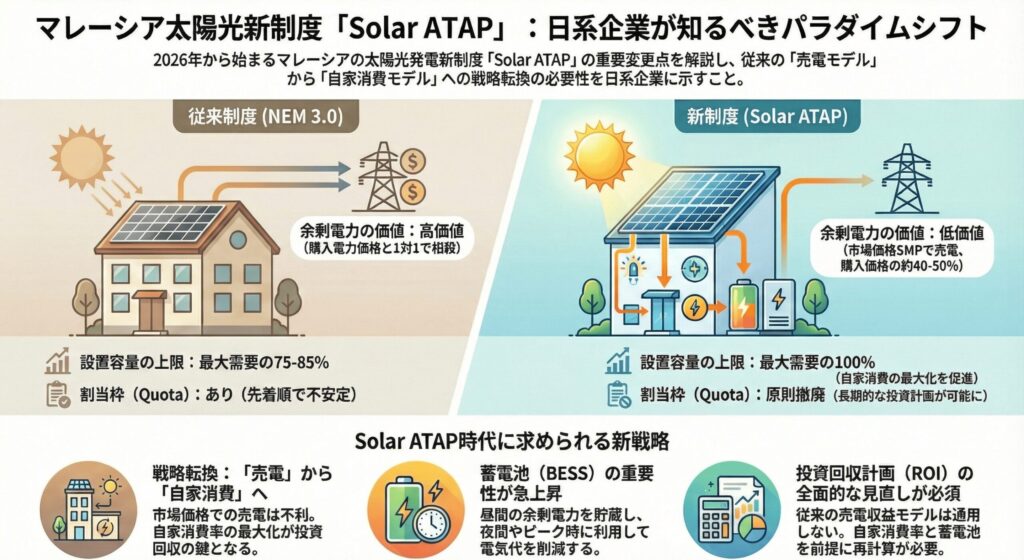
🔄 A complete shift from the "electricity sales model" to the "self-consumption model" Solar ATAP, which will begin on January 1, 2026, will mark the transition from the traditional NEM 3.0 fixed-price electricity sales to market price-linked (SMP). In particular, surplus electricity from commerce and industry is valued at wholesale prices (estimated at around RM0.20-0.30/kWh), which is likely to result in a large deviation from retail prices (around RM0.50-0.60/kWh)
📊 Eliminating quotas improves business foreseeability :Capacity limits (Quota) under the NEM system will be abolished in principle, making it easier for companies to plan long-term investments. However, the government reserves the power to set the cap for grid stability reasons
⚡ The importance of 100% installed capacity and battery storage strategies : It will be possible to install up to 100% of the maximum required electricity, and the "daytime storage → night consumption" model using storage batteries (BESS) is considered to be the key to recovering investment
🎯 Alignment with the National Energy Transition Strategy (NETR) As part of the Malaysian government's long-term strategy to achieve a 70% renewable energy ratio by 2050, the system is designed to address the duck curve problem and reduce subsidies at the same time
This time, we will explain the new roof-mounted solar power promotion system, "Solar ATAP (Solar Accelerated Transition Action Programme)," which will be launched in Malaysia from January 1, 2026.
The scheme is a significant turning point that could fundamentally change the economics of solar investment for Japanese companies with factories and establishments in Malaysia. You will be required to understand the crucial changes from the traditional Net Energy Metering (NEM) 3.0 system and make appropriate investment decisions.
In particular, there is a complete paradigm shift from the traditional business model of "selling excess electricity and monetizing it" to a model of "self-consumption and lowering costs," which will significantly change the assumptions of return on investment (ROI).
Based on local reports, government announcements, and industry information from Malaysia, this article explains the legal framework of the Solar ATAP system, changes from the previous system, and practical implications for Japanese companies.
Overview and implementation background of the Solar ATAP system
NETR is Malaysia's comprehensive strategy document for achieving net-zero emissions by 2050, with the following goals:
Raising the renewable energy ratio to 70% by 2050
2025: 31%
2035: 40%
2050: 70% (of which solar is expected to account for 58%)
Investment required by 2050 :RM1.2 ~ 1.3 trillion (equivalent to approximately 50 ~ 54 trillion yen)
Job creation by 2050 : Approximately 310,000 people
NETR has set six energy transition levers: energy efficiency (EE), renewable energy (RE), hydrogen, bioenergy, green mobility, and carbon capture, use, and storage (CCUS), and Solar ATAP is considered a core measure for promoting renewable energy.
Grid stabilization and the "duck curve problem"
The technical challenge behind the introduction of Solar ATAP is the strain on the power grid caused by the rapid increase in solar power generation.
What is the duck curve problem
The "Duck Curve" (Duck Curve) is named after the duck-like shape of the graph, which shows how increased solar power generation causes a large drop in net daytime electricity demand (the power the grid should provide), followed by a sharp increase in the evening.
In Malaysia, as the adoption of roof-mounted solar power generation progresses, the following problems are becoming more apparent:
Excess daytime electricity flows into the grid, disrupting the supply-demand balance
Need to meet sudden demand increase after evening solar shutdown
Conventional thermal power plants are required to frequently adjust their power output, reducing their efficiency
The introduction of market price linkage (SMP) in Solar ATAP is thought to be aimed at curbing the incentive to channel excess daytime electricity onto the grid, economically encouraging self-consumption and storage in storage batteries.
Definitive changes from NEM 3.0 to Solar ATAP
Marketization of electricity selling price mechanisms
The most significant change in Solar ATAP is that the purchase price of excess electricity will be market-linked.
How the conventional system (NEM 3.0) works
NEM 3.0 used the following "one-to-one offset" method:
Self-consumption of electricity produced by solar power generation
The excess power is sent to the grid and offset against the power used at night
the countervailing rate is equivalent (or approximate) to the purchased electricity price
Offset both energy charges (Energy Charge) and capacity charges (Capacity Charge)
This mechanism provided companies with virtually the same economic benefits as being able to sell excess electricity they generated during the day at a "high price."
Changes in the new system (Solar ATAP)
Solar ATAP will implement different mechanisms for commercial and industrial use.
Commercial and industrial
The purchase price of surplus electricity is System Marginal Price (SMP) It is determined in.
The following are some of the characteristics of SMP:
Variation according to the supply and demand balance : High electricity demand during high hours, cheap electricity during low hours
Low prices tend during peak solar power generation : As solar power generation increases during the day, power supply during those hours tends to be excessive and SMP tends to decrease
This change fundamentally changes the economics of traditional solar investment.
Review of DCF (Discount Cash Flow) calculations : Cash flow forecasts for PPA models and ESCO contracts that assume revenue from sales will change significantly
Reconsideration of contractual provisions : How to allocate SMP fluctuation risk in existing long-term PPA contracts will be a key issue in new contract negotiations
Extension of the investment recovery period : Reduced sales revenue may increase payback period
Relaxation of installed capacity limits
Solar ATAP raises the limit on installed solar capacity The Committee recommends that the State party take all necessary measures to ensure that all children are provided with adequate and adequate housing, adequate housing, adequate housing, adequate housing, adequate housing, adequate housing, and adequate housing.
project
NEM 3.0
Solar ATAP
Commercial and industrial maximum capacity
75~85% of maximum demand (Maximum Demand)
100% of maximum demand
Household use (single phase)
5kW
5kW (unchanged)
Household use (three phases)
12.5kW
15kW
Practical impact
The ability to install up to 100% of maximum demand allows companies to design equipment that maximizes self-consumption.
For example, if a factory has a maximum demand of 1,000kW, it could traditionally only install solar systems of around 750~850kW, but Solar ATAP will allow it to install up to 1,000kW.
The change signals the government's clear intention to shift from a "make money by selling" model to a "lower costs by self-consumption" model.
Elimination of quotas (Quota)
A major feature of Solar ATAP is that the capacity cap (Quota) that was in the previous NEM system has been abolished in principle.
Traditional problems
NEM 1.0, 2.0, and 3.0 had government-set megawatt (MW) limits for each generation.
Once the limit is reached, new applications will be suspended
First-come, first-served creates a sense of unfairness
It is difficult for companies to plan long-term investments
Improvements in Solar ATAP
Solar ATAP does not, in principle, have a capacity cap.
However, The government reserves the power to set caps "if they affect grid stability." The Committee recommends that the State party take all necessary measures to ensure that all children are provided with adequate and adequate housing, adequate housing, adequate housing, adequate housing, adequate housing, adequate housing, and adequate housing.
Points to note
Conditional foreseeability : Because there is a reservation clause that states that "the limit can be set at any time," this regulatory risk (risk of regulatory change) must be assessed when making investment decisions
Possible regional differences : In areas with dense industrial parks (e.g. Penang, Johor, Klang Valley), limits may be imposed due to capacity constraints
Legal framework and contractual practice of the Solar ATAP system
Applicable laws and regulations and competent authorities
The Solar ATAP system operates under the following laws and regulations and competent authorities:
Competent government agency
Ministry of Energy Transition and Water Transformation (PETRA) :Policy making
Energy Commission (Suruhanjaya Tenaga / Energy Commission) :Regulation/Supervision
Sustainable Energy Development Agency (SEDA) :Application reception and program management
Tenaga Nasional Berhad (TNB) : Counterparty to the grid connection contract
Applicable laws and regulations
The electricity supply business in Malaysia is primarily regulated by the following laws and regulations:
Energy Commission Act 2001 (Energy Commission Act)
Solar ATAP is expected to operate as a special regime for roof-mounted solar power generation within the framework of these laws and regulations.
Application process and contract award
Businesses wishing to participate in Solar ATAP are expected to go through the following process (details will be finalized after the guidelines are published on December 31, 2025):
Online application on the SEDA portal
Technical examination (Confirmation of possible phylogenetic connectivity)
Solar ATAP contract signed with TNB
Equipment design and construction
Systemic interconnector test
Commercial operation begins
Points to note in contractual practice
SMP Applicable Provisions In the commercial and industrial sectors, SMP-based payment mechanisms are included in contracts
Weighing system : Installation requirements for bidirectional meters (Net Meter)
Contract duration :NEM 3.0 set a 10-year contract period, but Solar ATAP also suggests the possibility of a "lifetime" contract
Legal nature of SMP (System Marginal Price)
Definition and calculation method of SMP
SMP is a price that reflects the marginal cost of generating electricity every 30 minutes in the Malaysian wholesale electricity market.
In the wholesale electricity market operated by Single Buyer, the power plants needed to meet demand are sequentially launched based on the generation costs offered by each generator. The cost of generating electricity for the last power plant activated (marginal power plant) shall be the SMP.
Ensuring transparency
SMP is Single Buyer's website It is published every 30 minutes at and can be seen by anyone who is a market participant.
Impact on contractual practice
SMP-linked purchase prices pose the following contractual challenges for solar power utilities:
Price volatility risk : Fixed price clauses are not available, making revenue forecasting difficult
The need for floor price clauses : Negotiating a contract with a minimum guaranteed price becomes important
Settlement cycle :SMP fluctuates every 30 minutes, making settlement calculations complicated
Regulatory differences between domestic and commercial
Solar ATAP is subject to very different regulations for home and commercial use.
Regulatory items
Home use (Domestic)
Commercial and industrial (Non-Domestic)
Electricity sales price
Energy Charge criteria (fixed)
SMP (Market Linked/Variable)
Foreseeability
expensive
low
Battery economy
Moderate
Extremely high
Investment payback period
Relatively short
Prolonged potential
This difference suggests that the addition of storage batteries (BESS) will become almost mandatory in commercial and industrial solar power generation.
Practical suggestions for Japanese companies and investors
Recalculation of Investment Recovery Plans (ROIs) Mandatory Items
With the introduction of Solar ATAP, traditional NEM-based investment plans will need a complete overhaul.
❌ Premises to avoid
A fixed-price model where excess electricity can be sold at a high price
Appropriation of NEM 3.0-based feasibility studies
Business plan with electricity sales revenue as the main revenue source
✅ Points to review
1. Maximizing the rate of own consumption
At Solar ATAP, the Self-Consumption Rate (Self-Consumption Rate) is the most important indicator of return on investment.
Analysis of daytime electricity usage patterns : Understand in detail the consumption of manufacturing processes, air conditioning, lighting, etc. by time of day
Shift changeability of manufacturing processes : Consider whether processes that consume a lot of power can be shifted to daytime
Goal setting : Equipment design aiming for a self-consumption rate of 80% or more is desirable
2. Economic evaluation of storage batteries (BESS)
The addition of a storage battery makes it possible to charge it during the day and discharge it during peak evening hours.
The following comparisons should be made in the assessment of the economy.
Avoidable TNB retail fees :RM0.50~0.60/kWh
SMP sales price :RM0.20~0.30/kWh
Price difference :RM0.20~0.40/kWh
This price difference is the basis for determining economy, taking into account the initial investment cost (CapEx) and cycle life of the battery.
Because SMPs vary, your investment plan should include the following scenario analysis:
Base case :Using historical SMP averages
Worst case : Revenue calculation at the lowest SMP
Stress test : Payback period in the event of a long-term downturn in SMP
It is recommended to obtain historical data on SMP on the Single Buyer website and perform statistical analysis.
Impact on ESCO contract and PPA models
In Malaysia, Japanese companies are often using ESCO (Energy Service Company) and PPA (Power Purchase Agreement) models when adopting solar power.
Traditional model
ESCO operators to cover the initial investment and install solar power generation equipment
Companies (demanders) purchase electricity from ESCO operators (usually at a lower unit price than TNB)
ESCO operators recover their investments through revenue from sales to TNB and electricity sales to companies
Contract duration usually 15~20 years
Things to note about the Solar ATAP model
After Solar ATAP is implemented, the following points must be reflected in the contract:
1. Allocation of SMP variable risk
As the proceeds from selling surplus electricity are linked to the SMP, it is necessary to clarify how this risk is shared between ESCO operators and demanders.
Floor price clause : Minimum guaranteed price if SMP falls below a certain level
Risk-sharing clauses : A system in which the two parties share in the revenue loss due to SMP fluctuations
2. Own consumption rate guarantee clause
For ESCO operators, changing demander electricity usage patterns will reduce self-consumption rates and worsen profitability.
Consultation clause in case of change of operating pattern : Handling during shift changes and shutdowns
3. Cost sharing when batteries are installed
If a storage battery is installed, it is necessary to clarify which will bear the initial investment and maintenance costs.
4. Institutional change risk (Regulatory Risk) during the contract period
Solar ATAP is a new system that will launch in January 2026, with further changes possible in the future.
Consultation clause in the event of a change of system : Contract review clause when economic performance changes significantly due to government system changes
Early termination clause : A clause that allows for early termination of a contract under certain conditions
Investment risk in grid-constrained areas
Solar ATAP generally states that there is no capacity cap, but in practice there are constraints on grid capacity per region.
Confirmation matters in due diligence
When considering a solar investment, it's important to check the following beforehand:
TNB grid interconnecting capacity : Excess capacity of substations and distribution lines in the area
Surrounding solar power generation status : Implementation status of other companies in the same industrial park
Whether or not there is a plan to strengthen the system : Whether TNB plans to carry out system expansion work
In particular, in Penang, Johor and Klang Valley regions with dense industrial parks, constraints on grid capacity may lead governments to set regional caps.
Checklist of items to be confirmed after the guidelines are published on December 31, 2025
Detailed guidelines for Solar ATAP are expected to be published by the Energy Commission on December 31, 2025. We recommend that you focus on the following items:
Technical requirements
□ Technical standards for grid interconnection (voltage, frequency, protection devices, etc.) □ Metering system specifications □ Special measures when batteries are installed
Economic conditions
□ Specific formula for SMP and update frequency □ Detailed definition of the household "Energy Charge" offset □ Settlement cycle (monthly, quarterly, etc.)
Contractual conditions
□ Contract period (10 years, indefinite, etc.) □ Conditions for mid-term cancellation □ Handling in the event of a change in the system
Regulatory risk
□ Criteria for imposing regional caps □ Handling of existing NEM contractors (with or without transitional measures) □ Application review period and lead time to lineage linkage
A comparative study of Solar ATAP and Japan's renewable energy system
Comparison with FIT/FIP in Japan
In Japan, the FIP (Feed-in Premium) system will be introduced from April 2022, and the country is transitioning from a feed-in tariff (FIT) to a market-linked system.
Institutional elements
Malaysia Solar ATAP
Japan FIP
Price mechanism
SMP (Wholesale Market Price)
JEPX Price + Premium
Foreseeability
Low (market linked, no premium)
Moderate (premium fixed)
Self-consumption incentives
Extremely strong
Moderate
Subsidy burden
Small (market based)
Large (levy)
Japan's FIP system guarantees a certain level of profitability to power generators by adding a certain premium to the market price (JEPX).
On the other hand, Solar ATAP in Malaysia has a more challenging market environment as there is no premium and the products are purchased purely at market price (SMP).
Lessons Japanese companies can learn in Malaysia
Malaysia's Solar ATAP is also considered a thought-provoking precedent for Japan's renewable energy policy.
1. The importance of maximizing self-consumption rates
In Japan, self-consumption solar power generation systems and self-consumption solar power generation systems are also attracting attention. Solar ATAP's clear direction of "consumption over sales" is also considered to be useful in formulating policy in Japan.
2. Combination with BESS
In Japan, the economy of storage batteries is gradually improving due to the creation of capacity markets and supply-demand adjustment markets. Malaysia's move to make BESS mandatory could be a policy cue for Japan to expand its battery storage market.
3. Transition to market mechanisms
Solar ATAP is an institutional design that boldly moves away from subsidy dependency and towards market mechanisms. It may serve as a reference case for the further evolution of Japan's FIP system.
Future prospects for the Solar ATAP system
Short-term response (2026)
Scrutiny of guidelines
It is considered important to promptly review the guidelines, which will be published on December 31, 2025, and refer any questions to SEDA or the Energy Commission.
Review of existing plans
If there is a solar deployment plan designed based on NEM 3.0, it will need to be reassessed to see if it can remain economical under Solar ATAP conditions.
Evaluation of storage battery options
Battery technology is evolving rapidly and costs are declining. It is recommended to obtain quotes from multiple BESS suppliers to select the most technically and economically optimal solution.
Medium-term strategy (2026-2030)
DX investment for self-consumption optimization
Digitalization of energy management is essential to get the most out of Solar ATAP.
Smart Meter : Visualize real-time power usage
BEMS (Building Energy Management System) : Automatic control of air conditioning, lighting, etc
AI demand forecast : Predict power demand from historical data and optimize BESS charging and discharging
Power transfer between group companies
For Japanese companies with multiple locations in Malaysia, it may be worth considering using a system for transferring electricity between group companies (Virtual PPA) in the future.
Integration with carbon credit strategy
The CO2 reduction benefits of solar power generation could potentially be certified and traded as carbon credits. An integrated decarbonisation strategy is required, which also takes into account alignment with international initiatives such as RE100 and the Carbon Disclosure Project (CDP).
Long-term perspective (2030-2050)
Alignment with Malaysia NETR Roadmap
Solar ATAP is part of NETR, Malaysia's aim to achieve a 70% renewable energy ratio by 2050. Further policy strengthening is expected in the future.
Possibility of introducing a carbon tax and emissions trading system
Expansion of the Green Power Certificate System
Preferential treatment for companies that achieve 100% renewable energy
Transboundary electricity trading through ASEAN Power Grid (APG)
ASEAN is developing the "ASEAN Power Grid" initiative, which will integrate the region's power grid and enable cross-border electricity trading. In the future, we may need to consider exporting the renewable electricity generated in Malaysia to other ASEAN countries.
Preparing for transition to a hydrogen economy
NETR also positions hydrogen as one of the key energy transition levers. The potential for green hydrogen production using solar power is also a notable long-term technological trend.
summary
On the surface, the Solar ATAP system may appear to be a "deterioration of selling conditions." However, if we understand its true nature, we can see that this is a significant turning point in Malaysia's energy policy.
Three directions Solar ATAP shows
Sustainable renewable energy adoption : We aim to promote long-term sustainable renewable energy by moving from subsidy dependency to market mechanisms
Ensuring grid stability :To address the duck curve problem, the introduction of SMP has promoted self-consumption and energy storage through economic incentives
Active participation of enterprises : We are asking companies to change from passive "electricity sellers" to active "energy managers"
Meaning for Japanese companies
Solar ATAP is a Japanese company that The prerequisites for investment decisions change It is an important turning point.
But there is no need to be pessimistic. If we put home consumption at the center, strategically use battery storage, and digitize energy management, Solar ATAP will still be Economically rational decarbonization measures It continues to be.
Rather, it can be seen as an evolution from the traditional passive model of "install and you'll make money" to an active model of "how to use it wisely."
Future responses
What matters is After the publication of the guidelines on December 31, 2025, we will promptly review our existing plans , to build investment strategies adapted to the new economic environment.
We would like to thank all Japanese companies based in Malaysia for this article, which will help you understand the Solar ATAP system and make appropriate investment decisions.
【Appendix】 Solar ATAP Glossary
Solar ATAP (Solar Accelerated Transition Action Programme) :Solar Transition Acceleration Action Program. Malaysia's new roof-mounted solar power promotion scheme to launch from January 1, 2026
SMP (System Marginal Price) :Market price calculated every 30 minutes in Malaysia's wholesale electricity market. It varies depending on the supply and demand balance, and is used as the purchase price for surplus electricity for commercial and industrial use by Solar ATAP
BESS (Battery Energy Storage System) :A system that stores excess solar power and discharges it when needed. Solar ATAP is key to improving economics
NETR (National Energy Transition Roadmap) : A comprehensive strategy document for achieving net-zero emissions by 2050, released by the Malaysian government in August 2023
Duck Curve (Duck Curve) :A graph showing the phenomenon where the increase in solar power generation causes a large drop in net electricity demand during the day, followed by a sudden increase in the evening. It was named after its shape, which resembles a duck
Self-Consumption (self-consumption) : Consuming the electricity generated by oneself. Maximizing self-consumption rates is key to return on investment at Solar ATAP
NEM (Net Energy Metering) :The traditional solar power generation promotion system. NEM 3.0 will expire on June 30, 2025, and will be transferred to Solar ATAP
PETRA (Ministry of Energy Transition and Water Transformation) :Ministry of Energy Transition and Water Resources Transformation. Government agency responsible for Solar ATAP
SEDA (Sustainable Energy Development Authority) :The agency responsible for receiving applications and running Solar ATAP programs
TNB (Tenaga Nasional Berhad) :Malaysia's national electricity company. Solar ATAP participants enter into grid-connected agreements with TNB